

🧠 Invisible Economy: How Small Expenses Are Destroying Your Money Without You Noticing!
Ever feel like your money disappears for no reason? The invisible economy might be the cause. Find out how small habits impact your finances and how to fix them.
4/13/20262 min read
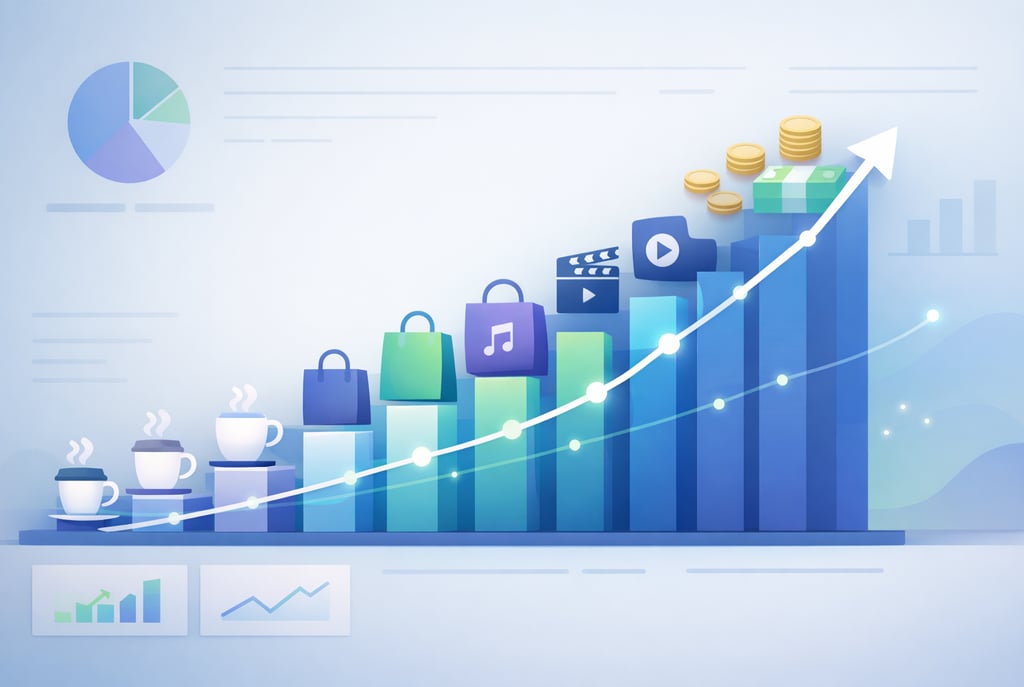

Have you ever reached the end of the month without understanding where your money went?
You didn’t make any big purchases, didn’t spend on anything important… and yet, your account is empty.
This happens because of a silent phenomenon called the invisible economy.
👉 These are small daily expenses that seem harmless, but when combined, have a huge impact on your finances.
In this post, you’ll discover how these expenses work, why they are dangerous, and most importantly, how to eliminate them in a practical way.
💡 What Is the Invisible Economy?
The invisible economy doesn’t show up clearly.
It hides in automatic habits like:
Buying snacks without thinking
Ordering delivery frequently
Subscribing to services you barely use
Making small impulse purchases
These expenses go unnoticed because they are small — but they are constant.
And that’s exactly what makes them dangerous.
📉 Why Do Small Expenses Cause Big Problems?
Let’s break it down simply:
$2 per day = $60 per month
$60 per month = $720 per year
Now imagine this over 5 years…
👉 You could be losing more than $3,600 without realizing it.
That money could be used to:
Build an emergency fund
Invest
Achieve important financial goals
Small amounts, when repeated, turn into big losses.
🚨 The Main Money Drainers
☕ 1. Daily Automatic Spending
Coffee, snacks, ride apps…
They seem cheap, but happen frequently.
📱 2. Forgotten Subscriptions
Streaming services, apps, platforms…
Do you really use all of them? Probably not.
🍔 3. Frequent Food Delivery
Convenience is expensive — and often unnoticed.
🛍️ 4. Impulse Purchases
Sales, “limited time offers”, “last units”…
👉 Marketing is designed to make you spend.
💳 5. Uncontrolled Credit Card Use
Small installments that turn into a financial snowball.
🔧 How to Eliminate the Invisible Economy (Step by Step)
1. 📊 Track Your Expenses
Write down everything for 7 days.
Yes, everything.
You’ll be surprised by what you find.
2. 🔍 Identify Patterns
Ask yourself:
Where am I spending unnecessarily?
What can I reduce or cut?
Awareness is the first step.
3. ✂️ Cut at Least 2 Expenses
You don’t need to change everything at once.
Start by eliminating:
One subscription
One unnecessary daily habit
4. 💡 Create Simple Rules
For example:
“Only order delivery on weekends”
“Avoid impulse purchases during the week”
Rules reduce impulsive decisions.
5. 💰 Redirect Your Money
Here’s the key:
👉 It’s not enough to save — you need to give your money a purpose.
Use it for:
Savings
Investments
Paying off debt
📈 The Power of Consistency
You don’t need radical changes.
Small actions repeated daily create massive long-term results.
Example:
Saving $2 per day = over $720 per year
Investing that amount = even greater growth
⚠️ Common Mistake to Avoid
Many people think:
👉 “It’s just a small amount, it doesn’t matter.”
That’s the biggest mistake.
Because it’s not one expense — it’s hundreds over time.
💬 Conclusion: Control Is in the Details
If you want to improve your financial life, you need to pay attention to what most people ignore.
The invisible economy may be sabotaging your progress without you noticing.
But now you have the knowledge to change that.
Start today:
✔ Observe your habits
✔ Cut unnecessary expenses
✔ Use your money intentionally
👉 Wealth is not built only through big decisions — but through small daily choices.