

🕵️♂️ The Psychology of Hidden Money: How Tiny Invisible Expenses Are Sabotaging Your Budget!!
Tiny hidden expenses may be sabotaging your finances without you noticing. Learn why they happen and how to eliminate them to regain full control.
12/4/20253 min read
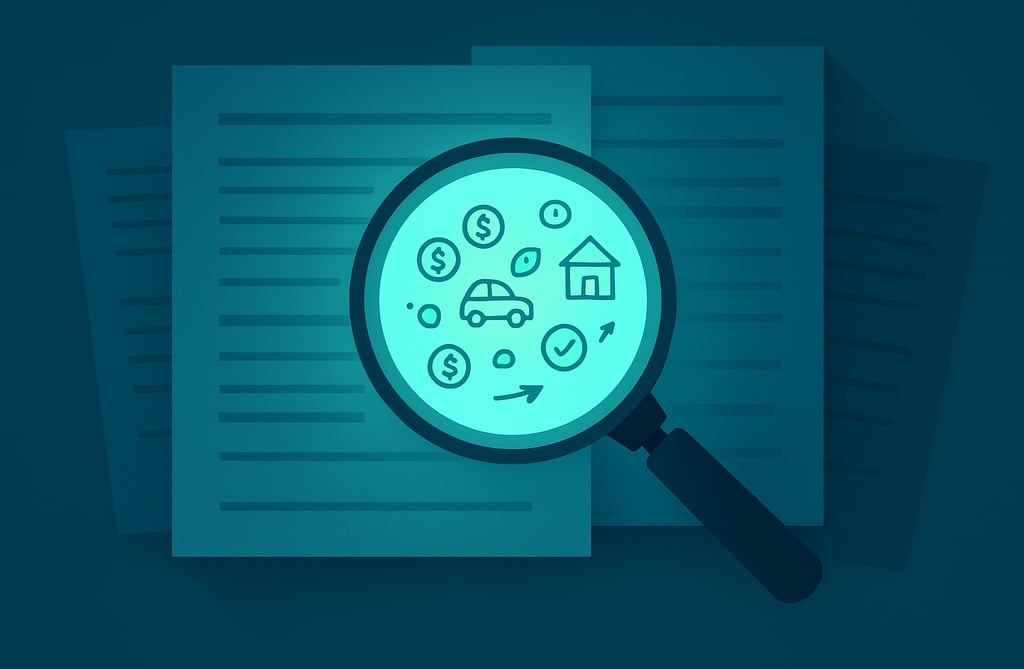
When we think about financial problems, most people imagine big debts, overspending, or the lack of a solid plan. But the truth is this: for most individuals, what really destroys their budget isn’t the big mistakes — it’s what I call hidden money.
These are small, automatic, almost invisible expenses that slip through your fingers without you noticing.
Behavioral economics has studied this phenomenon for years, showing how the brain creates financial “blind spots” that make you spend without realizing it.
This post will show you why this happens, how to identify these silent leaks, and — most importantly — how to eliminate them without feeling deprived.
Get ready: you’re probably losing more hidden money than you think.
💸 1. What Are “Invisible Expenses”?
Invisible expenses are small costs that:
seem insignificant on their own
don’t trigger a feeling of loss
turn into habits without conscious thought
add up to a surprising amount over time
Classic examples include:
hidden bank fees
forgotten subscriptions
automatic “micro-purchases” (a few dollars here, a few there…)
convenience fees
silent annual adjustments
low-value impulse purchases
transport or digital service fees you never track
The trap is simple: the amount is small, but the frequency is high.
🧠 2. Why Does Our Brain Ignore These Expenses?
Three psychological mechanisms explain it:
2.1. The Financial “Numbness” of Small Values
When we make a small purchase, the brain does not activate the “pain of paying.”
Neuroeconomics research shows that low amounts fly under our emotional radar.
2.2. The Illusion of Insignificance
$5 today feels like nothing.
But $5 every day means more than $150 a month.
Your brain doesn’t calculate this automatically — you have to consciously look at the pattern.
2.3. The Normalization of Micro-Habits
Once a small expense becomes routine, the brain labels it as “neutral.”
Invisible habits are the hardest to break because they produce neither guilt nor reward.
🔍 3. The Most Dangerous Types of Invisible Expenses
3.1. Automatic Subscriptions (Silent but Deadly)
Many services charge small amounts but rely on continuous billing — and on your forgetfulness.
Streaming, apps, games, tools, subscription clubs… together they can cost hundreds per year.
3.2. Low-Impact Purchases
Cheap items you buy without thinking:
snacks
small accessories
“under $10” items
products you buy “just because they were on sale”
These expenses don’t hurt — that’s why they accumulate.
3.3. Fees You Accept Because They Seem “Normal”
Often unnecessary:
bank fees
card maintenance
convenience charges
simple transaction fees
These are the most disguised expenses of all.
3.4. Invisible Digital Spending
One-click purchases reduce psychological friction.
Paying digitally feels less “real” than handling physical cash.
💥 4. The Accumulated Impact of Invisible Money
When you add up these micro-expenses, the result can be shocking:
$2/day in small daily purchases
$8 from a forgotten subscription
$5 in bank fees
$3 in digital service fees
➡️ Monthly total: around $90
➡️ Yearly total: more than $1,000
Imagine investing that instead.
🛠️ 5. How to Identify and Eliminate Invisible Expenses
Here’s the practical part — simple, efficient, and transformative.
5.1. Do a 24-Hour Financial X-Ray
For one day, write down everything.
This reveals spending you no longer notice.
5.2. Review All Your Subscriptions
Use your statement as your guide.
Ask yourself:
✔ Do I use this?
✔ Do I need this?
✔ Does this bring real value?
Cancel without guilt.
5.3. Replace Micro-Spending with Micro-Investing
Example:
If you spend $2 a day on something irrelevant, redirect that same amount to an automatic investment.
Your brain replaces a habit without feeling deprived.
5.4. Use the Double Question Rule
Before buying anything under $10, ask:
“Would I still buy this if it cost twice as much?”
“Would I buy it if it weren’t on sale?”
If the answer is no, you just saved hidden money.
5.5. Review Fees and Plans
Negotiating, switching banks, or adjusting service plans can save hundreds per year.
📈 6. The Positive Side Effect: Financial Clarity
When you eliminate hidden money leaks, you’ll discover that:
your budget finally breathes
you feel more in control
financial anxiety decreases
savings grow naturally
you have money for things that truly matter
The truth is simple:
It’s not about earning more — it’s about stopping the silent losses.
🔚 Conclusion: Hidden Money Is Real — And It’s Costing You More Than You Think
Most people don’t lose money through big mistakes.
They lose it through tiny, unnoticed habits repeated every single day.
Hidden money is sneaky, silent, and fueled by automatic behaviors.
But once you identify these blind spots, eliminate micro-expenses, and replace them with micro-investments, your financial life changes — without pain, without sacrifice, and without complexity.
If you want to improve your financial results, start noticing what your brain ignores.
Your wallet will thank you.